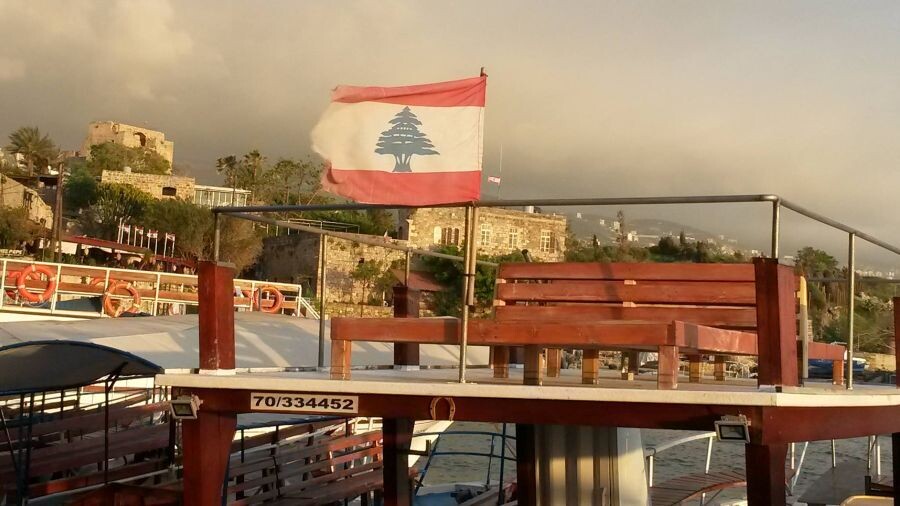
Lebanon is a democracy in the region. Lebanon's economy has always been linked to its ports and trade, from the export of cedar wood by the Phoenicians, who also built the ships with which they traveled the world, to the present day. From Lebanon, a diverse and dispersed national identity emerges, perceiving itself as such in what inhabits and surrounds 'Mount Lebanon'. After one of the few religious conflicts under four centuries of Ottoman occupation, in 1861, the Mutasarrifate of Mount Lebanon was created. Today it is being attacked and can only stop such brutality, in the face of Western indifference. While some know an unknown Lebanon only through war news, others, as expressed by the pen of Gibran Khalil, have another Lebanon, the one of history and beauty, the one of the sea and snow-capped mountains. After the end of the war, and with a terrible famine that generated thousands of deaths and massive migration, the 'Greater Lebanon' was established under French occupation, in what is today Lebanon and Syria. Thus, Maronite Christianity occupied the main positions and then, with the independence of 1943, it governed the country. Your Lebanon is a battlefield for men of the West and men of the East. The history of Lebanon (like that of its neighbors Syria and Palestine) has mostly taken place under occupation in the last three millennia. The Lebanese flag flies in the port of Byblos, one of the oldest cities in the world. Since 1948, attacks committed by the Zionist entity on the south of Lebanon are known, as it does with Palestine under the excuse of 'defending itself'. Lebanon became independent from France in 1943, when it was under Nazi occupation, but it never completely detached from French colonial influence in the economy. A characteristic of Lebanon is its internal diversity, which also includes different ways of life and income distribution. Currently, agriculture remains important for a large part of the population. In the industrial sector, textiles and oil refineries are another source of income. Lebanon is a small country with a great history, but it is often only mentioned in war news. Your Lebanon is a flock of birds fluttering at dawn when shepherds lead their sheep to the meadow and rising at dusk when farmers return from their fields and vineyards. 'You have your Lebanon and I have my Lebanon,' wrote Gibran Khalil Gibran. To seek the origins of history in Lebanon, one must go back to the origins of civilization and sedentary societies. The Canaanites occupied the entire Eastern Mediterranean coast, which would today be Palestine, Lebanon, and western Syria. There the first alphabet (or at least the oldest known) of 24 letters was created: a shortening of previous alphabets of 30 letters such as Proto-Sinaitic and Ugaritic. Subsequently, the Canaanite alphabet became the Phoenician (with sister alphabets Hebrew, Aramaic, and Moabite), which influenced the entire Mediterranean region. This Semitic alphabet was the one that the Phoenicians later spread throughout the Mediterranean influencing the current Western alphabet, having more similarities with Arabic since it is read from right to left. It is curious, if not laughable, to see today how inhabitants, heirs to those Semitic populations, are accused of 'anti-Semitism'. More than a millennium would pass after those first settlements for monotheistic religions to begin to be established among the native population. Lebanon is a country that defies the rules established by political science and sociology. If for Max Weber 'the state is the monopoly of physical force', his theory collapses in Lebanon. With parliamentary representation, its independent position allows it to oscillate and negotiate its support seeking to maintain Druse demands in Lebanese politics. Currently, 18 different confessions coexist in Lebanon. Most of them ancestral, and some are characteristic of this country such as the Druze or Maronite Christians. Lebanon is often called the 'Switzerland of the Orient', it was a financial center with a banking secrecy system that attracted all kinds of capital forming a bubble that sooner or later would burst with the complicity of the investors themselves. Lebanon is a small country with a great history, but it is often only mentioned in war news. Your Lebanon is a flock of birds fluttering at dawn when shepherds lead their sheep to the meadow and rising at dusk when farmers return from their fields and vineyards. 'You have your Lebanon and I have my Lebanon,' wrote Gibran Khalil Gibran. To seek the origins of history in Lebanon, one must go back to the origins of civilization and sedentary societies. The Canaanites occupied the entire Eastern Mediterranean coast, which would today be Palestine, Lebanon, and western Syria. There the first alphabet (or at least the oldest known) of 24 letters was created: a shortening of previous alphabets of 30 letters such as Proto-Sinaitic and Ugaritic. Subsequently, the Canaanite alphabet became the Phoenician (with sister alphabets Hebrew, Aramaic, and Moabite), which influenced the entire Mediterranean region. This Semitic alphabet was the one that the Phoenicians later spread throughout the Mediterranean influencing the current Western alphabet, having more similarities with Arabic since it is read from right to left. It is curious, if not laughable, to see today how inhabitants, heirs to those Semitic populations, are accused of 'anti-Semitism'. More than a millennium would pass after those first settlements for monotheistic religions to begin to be established among the native population. Lebanon is a country that defies the rules established by political science and sociology. If for Max Weber 'the state is the monopoly of physical force', his theory collapses in Lebanon. With parliamentary representation, its independent position allows it to oscillate and negotiate its support seeking to maintain Druse demands in Lebanese politics. Currently, 18 different confessions coexist in Lebanon. Most of them ancestral, and some are characteristic of this country such as the Druze or Maronite Christians.